Air Purifier Energy Consumption Guide: Real Wattage and Annual Costs
How to Calculate Your Air Purifier's Annual Electricity Cost
The formula: (wattage ÷ 1,000) × hours per day × 365 × electricity rate = annual cost
The US average residential electricity rate is around $0.16 per kWh (2025 data; varies significantly by state — Hawaii runs $0.40+, Louisiana around $0.10).
Example with a 45W purifier running 24 hours per day:
(45 ÷ 1,000) × 24 × 365 × $0.16 = **$63.07 per year**
Most people run their purifier on auto mode rather than max speed continuously, which typically reduces effective wattage by 30-50%.
Wattage by Speed Setting
Wattage varies significantly across speed settings. Here is what to expect from typical mid-range purifiers:
| Unit | Sleep/Low | Medium | High |
|---|---|---|---|
| Coway Mighty (AP-1512HH) | 5W | 10W | 38W |
| Coway Airmega 400 | 2W (eco) | 27W | 66W |
| Levoit Core 300 | 3W | 8W | 22W |
| Levoit Core 600S | 8W | 25W | 58W |
| Winix 5500-2 | 8W | 26W | 70W |
| Blueair Blue Pure 211i+ | 10W | 25W | 60W |
| Dyson Purifier Hot+Cool | 36W | 65W | 85W |
| IQAir HealthPro Plus | 27W | 64W | 215W |
The Dyson and IQAir units draw significantly more power than mid-range alternatives. The IQAir on max speed at 24/7 costs around $300/year at $0.16/kWh.
Energy Star Certification
Energy Star-certified air purifiers must meet two thresholds: maximum standby power (2W or less) and a CADR-to-watt efficiency ratio. As of 2025, Energy Star requires at least 2 CADR per watt.
Models that meet Energy Star typically run 15-40% more efficiently per unit of clean air delivered than non-certified models. For 24/7 continuous use, this translates to a meaningful long-term cost difference.
Check the Energy Star database at energystar.gov for current certified models. The Coway Mighty, Winix 5500-2, and Levoit Core series are among the most CADR-per-watt efficient certified models.
Auto Mode vs Continuous
Auto mode uses a particle sensor to adjust fan speed to the air quality in the room. In practice, this means the unit runs at low speed for most of the day (when air quality is good) and ramps up briefly when triggered (cooking, someone entering the room, dust events).
The energy difference between auto mode and continuous low-speed operation is typically small. What auto mode does well: it runs at high speed precisely when you need it (immediately after a trigger) and backs off when the room air is already clean.
If you are concerned about energy use, running on auto mode in a clean room is more efficient than running at a fixed medium speed. But the savings are modest — typically 10-20% compared to fixed medium speed.
The Efficiency vs CADR Tradeoff
More efficient per watt does not always mean the right pick. A 22W purifier with a CADR of 100 serving a 200 sq ft room may be more efficient per watt than a 66W unit with CADR 350 — but if you put the 22W unit in a 400 sq ft room, it runs at max speed constantly to keep up, negating any efficiency advantage.
Size the unit for the room first. Then compare wattage among models that are properly sized. An oversized unit running at low speed is almost always more efficient than an undersized unit running at max.
Affiliate Disclosure
Clean Air Picks participates in the Amazon Associates program. We earn a small commission from purchases made through our links at no additional cost to you. This helps us maintain and improve our site while providing honest, unbiased reviews.
Recommended Products
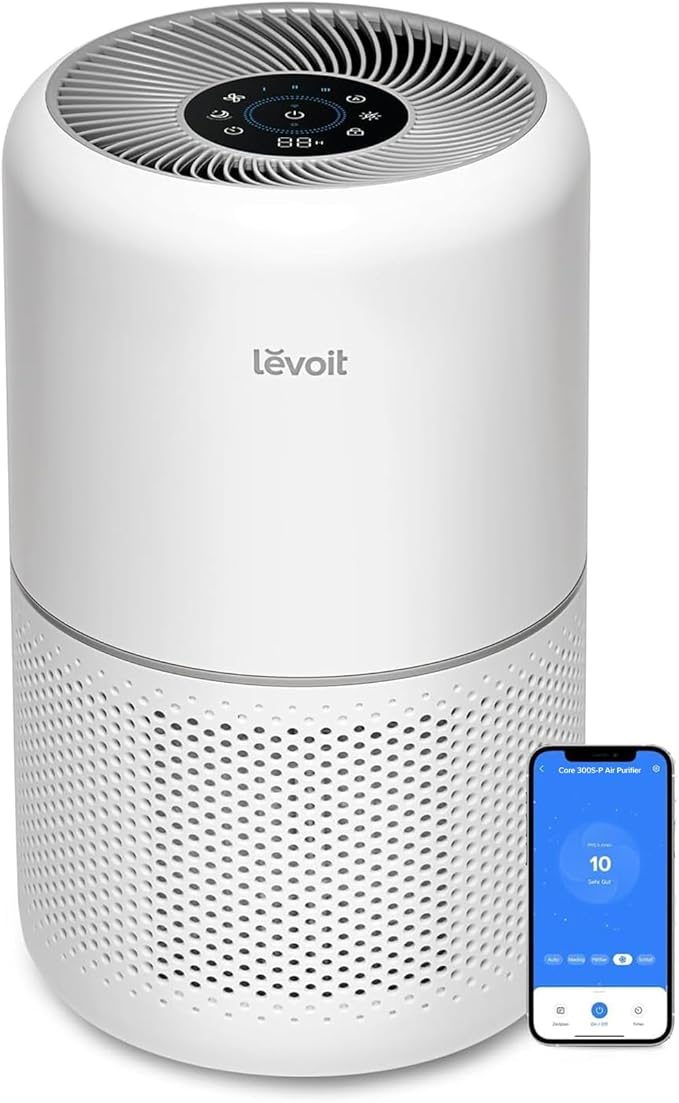
Levoit Core 300S
Budget
Check price
Compact air purifier with H13 HEPA filter for small to medium rooms.
View on Amazon →
Levoit Vital 200S
Budget
Check price
Smart air purifier with app control and auto mode for allergies.
View on Amazon →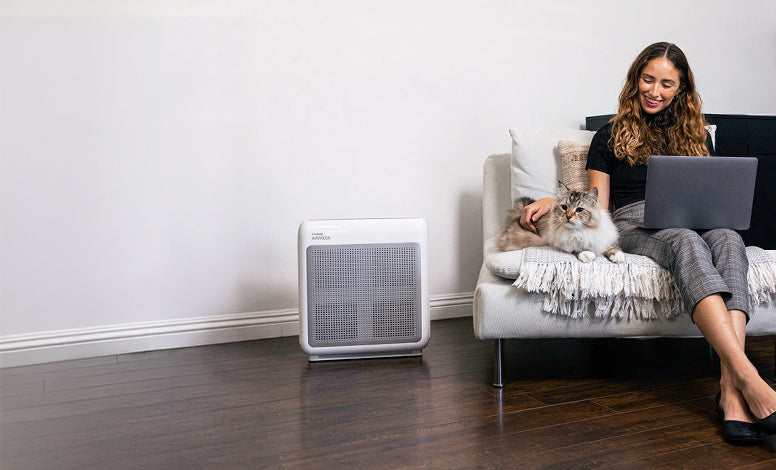
Coway Airmega 400
Premium
Check price
Advanced ionization with dual-sided air intake for large rooms.
View on Amazon →
Dyson Purifier Cool
Premium
Check price
Combines air purification with cooling fan function.
View on Amazon →
Winix 5510
Mid-Range
Check price
Successor to the 5500-2 with True HEPA, carbon filtration, PlasmaWave, and app support.
View on Amazon →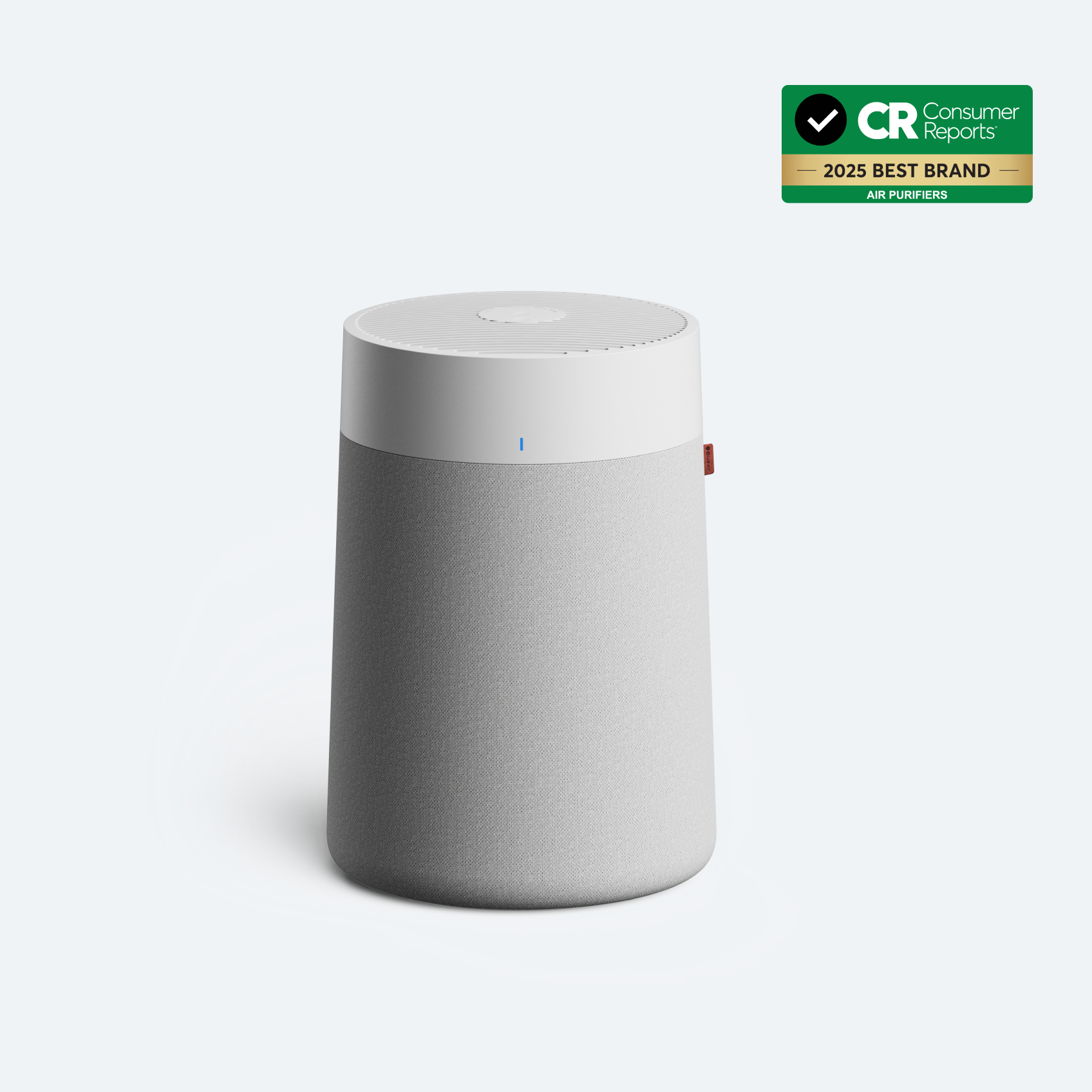
Blueair Blue Pure 211+
Mid-Range
Check price
Swedish design with high CADR and quiet operation.
View on Amazon →
Honeywell HPA300
Mid-Range
Check price
Reliable HEPA filtration with three cleaning levels.
View on Amazon →

Alen BreatheSmart 75i
Premium
Check price
Whisper-quiet premium purifier for large spaces.
View on Amazon →
Molekule Air Pro
Premium
Check price
Advanced photoelectrochemical oxidation technology.
View on Amazon →
GermGuardian AC5250PT
Budget
Check price
Compact with germicidal UV-C light technology.
View on Amazon →

Levoit Air Purifier Pro
Mid-Range
Check price
Smart WiFi enabled with real-time air quality monitoring.
View on Amazon →
Airthings Renew Air Purifier
Smart
Check price
For bedrooms where you want to see the air quality, not guess. Built-in particulate and humidity sensors with an auto mode that ramps with the room. HEPA handles fine particles down to PM1. The catch: no carbon stage, so it does little for odors or gases.
Buy Direct →
Austin Air HealthMate
Premium
Check price
If you deal with smoke, chemicals, or strong odors, this is the heavy hitter. Medical-grade HEPA plus 15 lbs of activated carbon and zeolite, rated for rooms up to 1500 sq ft, with filters that last about 5 years. You pay for it in price and weight.
Buy Direct →
AirFree P2000
Filterless
Check price
A filterless purifier that heats incoming air to destroy mold, bacteria, and dust mites, so there is nothing to replace and no filter cost. The tradeoff is real: it does not capture dust or large allergens the way a HEPA unit does, so pair it with one if particles are your problem.
Buy Direct →
EyeVac Air Touchless Vacuum and Air Purifier
Specialty
Check price
A floor vacuum and air purifier in one, made for entryways and pet areas. Sweep debris to the touchless sensor base and it pulls it in, while the HEPA side handles airborne dust. As a pure air purifier, a dedicated HEPA unit moves more air for the money.
Buy Direct →