Air Quality Index and Your Health: What the Numbers Mean
What the AQI Scale Measures
The Air Quality Index (AQI) is a 0-500 scale published by the EPA that converts pollutant concentrations into a single number. Higher is worse. The scale is not linear — the categories represent health thresholds, not equal increments.
AQI reports the worst-performing pollutant for the day. If PM2.5 is at AQI 80 and ozone is at AQI 110, the reported AQI is 110 (ozone, the worse of the two).
The Six AQI Categories
| AQI Range | Category | Color | Who's at Risk |
|---|---|---|---|
| 0-50 | Good | Green | No one |
| 51-100 | Moderate | Yellow | Unusually sensitive people |
| 101-150 | Unhealthy for Sensitive Groups | Orange | Asthma, heart/lung disease, children, elderly |
| 151-200 | Unhealthy | Red | Everyone |
| 201-300 | Very Unhealthy | Purple | Serious risk for everyone |
| 301-500 | Hazardous | Maroon | Emergency conditions |
Most major US cities spend the majority of days in the 0-100 range. During wildfire season or heat events, AQI can spike to 200+ even in areas that normally score well.
The Two Main Pollutants That Drive AQI
**PM2.5 (Fine Particulate Matter)**: Particles smaller than 2.5 microns. Primary driver of AQI during wildfire smoke events and in areas with heavy vehicle traffic. PM2.5 penetrates the lungs and enters the bloodstream. This is what air purifiers address best. The 24-hour average PM2.5 concentration that corresponds to AQI 100 is 35.4 micrograms per cubic meter.
**Ozone (ground-level)**: A gas formed by chemical reactions between vehicle emissions and sunlight. Peaks on hot, sunny afternoons. Ozone cannot be filtered by a standard HEPA + carbon air purifier — it requires specialized activated carbon media or a dedicated ozone scrubber. If the day's AQI is driven by ozone rather than PM2.5, your air purifier addresses less of the risk.
When to Check AQI and How to Act
**For sensitive groups (asthma, lung disease, children under 14, adults over 65):**
- AQI 51-100: Consider limiting prolonged outdoor exertion
- AQI 101-150: Reduce outdoor activity; run your air purifier indoors
- AQI 151+: Stay indoors; seal windows, run purifier continuously
**For healthy adults:**
- AQI 101-150: Sensitive groups should limit outdoor activity; healthy adults can usually tolerate moderate exertion
- AQI 151-200: Limit all strenuous outdoor activity
- AQI 201+: Avoid outdoor activity; indoor air management is essential
Where to Check AQI
The EPA's AirNow.gov is the official source. It reports both current AQI and forecasts by ZIP code. The IQAir AirVisual app aggregates EPA and sensor data and shows hyperlocal readings from nearby outdoor monitors.
For real-time neighborhood-level data, PurpleAir.com uses a network of community-owned sensors. Note that PurpleAir raw readings run higher than EPA-calibrated values — PurpleAir applies a correction factor (EPA AQS conversion) that you can enable in the settings.
AQI and Your Air Purifier
The action rule: above AQI 100 with PM2.5 as the driver, run your air purifier on medium or high continuously. A CADR-matched purifier can reduce indoor PM2.5 to Good levels (AQI < 50) even when outdoor air is Unhealthy (AQI 150-200), as long as windows and doors are kept closed.
At AQI 200+, an air purifier alone may not fully compensate if the building has significant air infiltration. Adding weatherstripping, using HVAC with MERV 13 filters, and sealing gaps around windows and doors significantly improves outcomes.
Affiliate Disclosure
Clean Air Picks participates in the Amazon Associates program. We earn a small commission from purchases made through our links at no additional cost to you. This helps us maintain and improve our site while providing honest, unbiased reviews.
Recommended Products
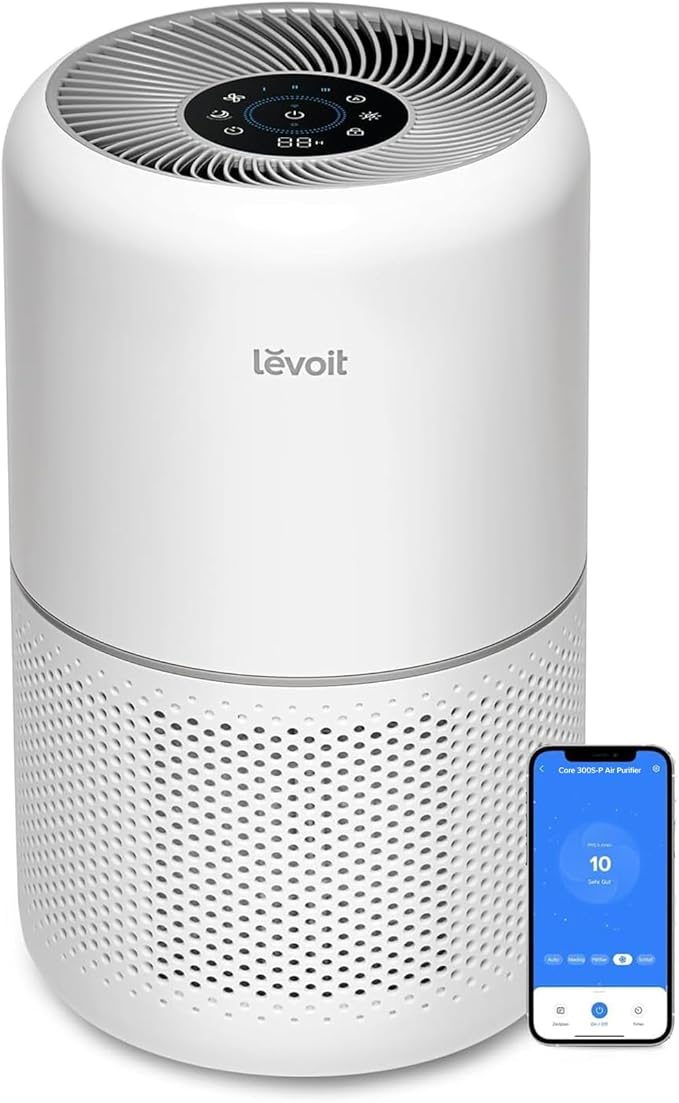
Levoit Core 300S
Budget
Check price
Compact air purifier with H13 HEPA filter for small to medium rooms.
View on Amazon →
Levoit Vital 200S
Budget
Check price
Smart air purifier with app control and auto mode for allergies.
View on Amazon →
Coway Airmega 400
Premium
Check price
Advanced ionization with dual-sided air intake for large rooms.
View on Amazon →
Dyson Purifier Cool
Premium
Check price
Combines air purification with cooling fan function.
View on Amazon →
Winix 5510
Mid-Range
Check price
Successor to the 5500-2 with True HEPA, carbon filtration, PlasmaWave, and app support.
View on Amazon →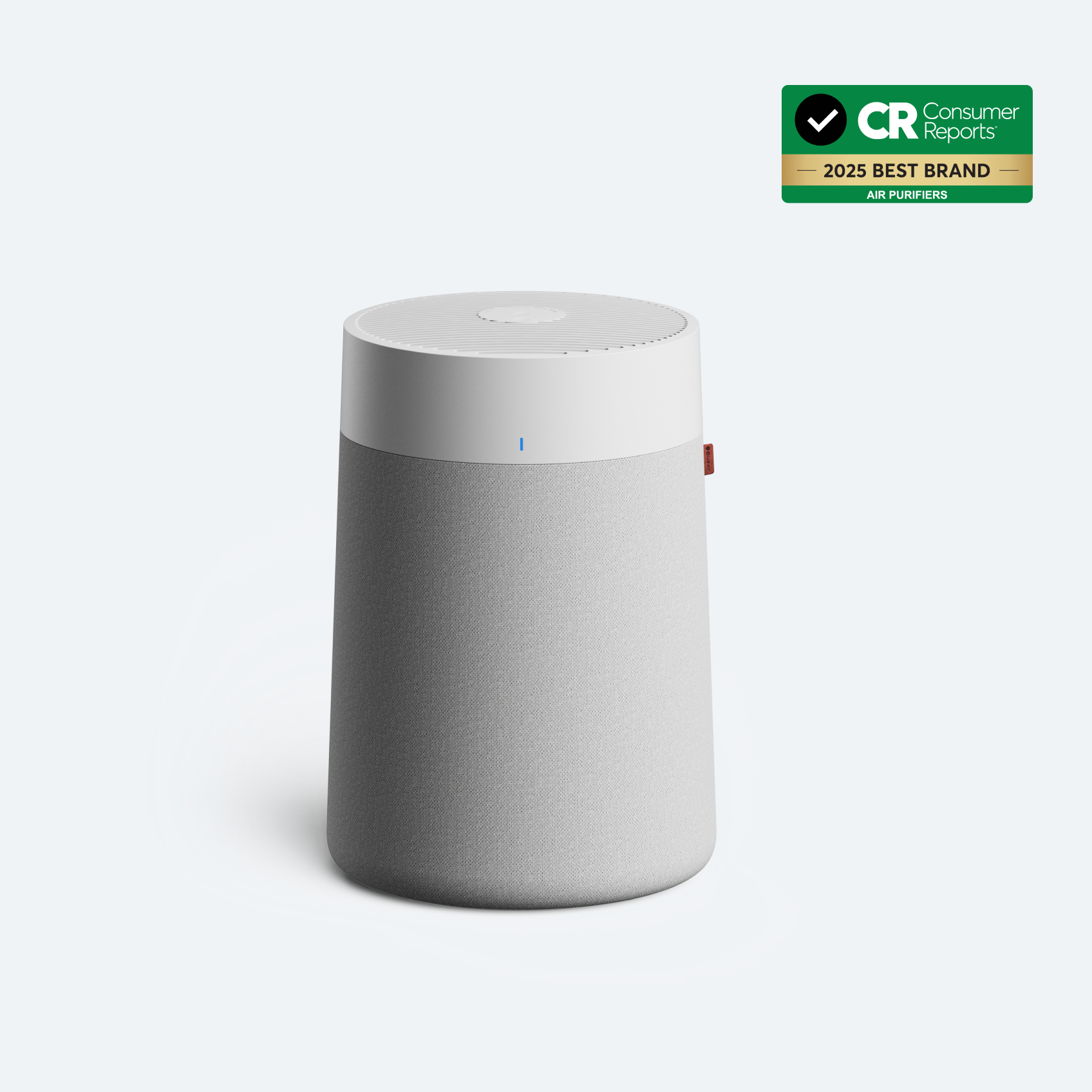
Blueair Blue Pure 211+
Mid-Range
Check price
Swedish design with high CADR and quiet operation.
View on Amazon →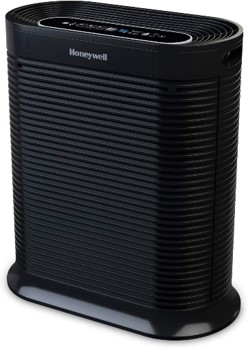
Honeywell HPA300
Mid-Range
Check price
Reliable HEPA filtration with three cleaning levels.
View on Amazon →

Alen BreatheSmart 75i
Premium
Check price
Whisper-quiet premium purifier for large spaces.
View on Amazon →
Molekule Air Pro
Premium
Check price
Advanced photoelectrochemical oxidation technology.
View on Amazon →
GermGuardian AC5250PT
Budget
Check price
Compact with germicidal UV-C light technology.
View on Amazon →

Levoit Air Purifier Pro
Mid-Range
Check price
Smart WiFi enabled with real-time air quality monitoring.
View on Amazon →
Airthings Renew Air Purifier
Smart
Check price
For bedrooms where you want to see the air quality, not guess. Built-in particulate and humidity sensors with an auto mode that ramps with the room. HEPA handles fine particles down to PM1. The catch: no carbon stage, so it does little for odors or gases.
Buy Direct →
Austin Air HealthMate
Premium
Check price
If you deal with smoke, chemicals, or strong odors, this is the heavy hitter. Medical-grade HEPA plus 15 lbs of activated carbon and zeolite, rated for rooms up to 1500 sq ft, with filters that last about 5 years. You pay for it in price and weight.
Buy Direct →
AirFree P2000
Filterless
Check price
A filterless purifier that heats incoming air to destroy mold, bacteria, and dust mites, so there is nothing to replace and no filter cost. The tradeoff is real: it does not capture dust or large allergens the way a HEPA unit does, so pair it with one if particles are your problem.
Buy Direct →
EyeVac Air Touchless Vacuum and Air Purifier
Specialty
Check price
A floor vacuum and air purifier in one, made for entryways and pet areas. Sweep debris to the touchless sensor base and it pulls it in, while the HEPA side handles airborne dust. As a pure air purifier, a dedicated HEPA unit moves more air for the money.
Buy Direct →