Best Air Purifier for Bedroom in 2026: Quiet HEPA Picks for Sleep
What Makes a Bedroom Purifier Different
You will spend roughly a third of your life in your bedroom. The air there matters, but so does the noise floor. A bedroom air purifier has a harder job than a living-room unit because it has to do real cleaning while staying under 30 dB so it does not interfere with sleep.
Most "best of" lists ignore that constraint. They list the same powerful purifiers that work great in the kitchen and pretend the noise is fine. It is not. A purifier that hums at 38 dB on its lowest setting is louder than a quiet refrigerator and will wake light sleepers every time the compressor cycles.
The right bedroom purifier hits three numbers: True HEPA at H13 grade, CADR matched to twice your room size, and a low-fan noise floor at or below 25 dB. Anything else is a compromise.
How to Size for a Bedroom
A standard US bedroom is 132-225 sq ft. A primary suite ranges 200-400 sq ft. The thing most buyers get wrong: bedroom doors close. That is good for filtration (the purifier does not have to fight whole-house air mixing) but it means the unit is the only thing changing the air. You want 4-5 air changes per hour because you are breathing the same air for 7-8 hours.
Practical rule: pick a unit rated for at least 2x your bedroom's actual square footage at the manufacturer's stated coverage. A 12 by 14 bedroom (168 sq ft) needs a purifier rated for at least 350 sq ft. A 16 by 20 primary (320 sq ft) needs 650+ sq ft of rated coverage.
What "Quiet" Actually Means in Decibels
A few reference points so you can interpret spec sheets:
- 20 dB: rustling leaves, whisper. Inaudible from 6 feet.
- 25 dB: quiet bedroom at night. The bar for a good bedroom purifier.
- 30 dB: soft mechanical hum, like a quiet ceiling fan. Most people sleep through it but light sleepers notice.
- 35 dB: noticeable. You will hear it.
- 40+ dB: refrigerator compressor. Wakes most people when it cycles.
Manufacturers love to quote the lowest fan setting only. Read the full noise range. A unit that goes 25-58 dB is great for sleep but useless if your room needs the higher fan speed and your partner is a light sleeper.
The Picks
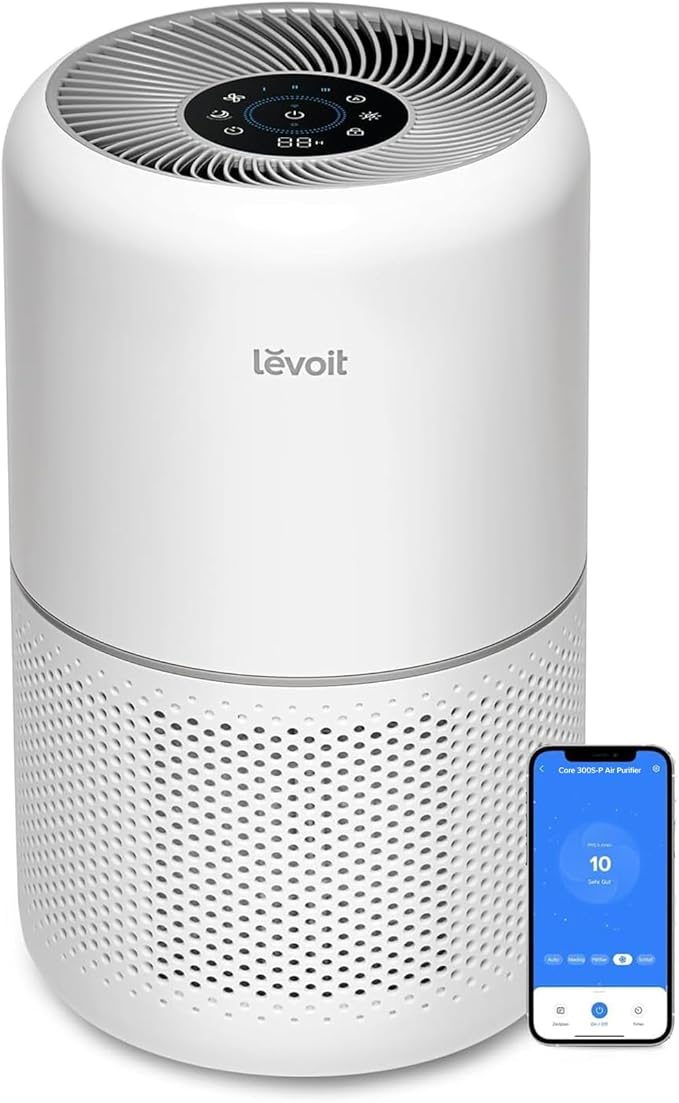
Levoit Core 300S: Best Bedroom Pick Under $100
$80-100. The default answer for any bedroom under 250 sq ft. H13 HEPA, 24 dB on its lowest setting (basically inaudible from the bed), and CADR of 141 for dust. The display has a sleep mode that turns all the lights off completely, which sounds minor until you realize half of "smart" purifiers have a glowing LED that lights up the whole ceiling.
The trade-off: it is small. The motor is sized for a 200 sq ft room running at fan speed 2. If you push it to fan 3 or 4 (which you will need in a 250+ sq ft room), it climbs to 36 dB and stops being a sleep-friendly unit.
Replacement filter is around $20 every 6-8 months. Cheapest unit on this list to own.
Coway Airmega AP-1512HH: Best Mid-Size Bedroom
$180-230. CADR around 240, coverage to 361 sq ft, and a noise floor of 24.4 dB. The eco-mode shuts the fan off completely when air is clean, which is useful in a bedroom where you do not need it running at full bore all night. True HEPA (not H13, but tight enough to handle typical bedroom dust and dander).
This is the right pick for primary bedrooms in the 250-350 sq ft range where the Core 300S would have to run loud.
Blueair Blue Pure 211+: Best Quiet Premium Bedroom Pick
$250-300. Coverage to 540 sq ft, CADR around 350. The reason this beats almost every competitor for bedrooms specifically: the noise floor is 31 dB on low, but the unit has so much reserve capacity that it never has to step up in a normal bedroom. It just cruises. The fabric pre-filter is washable and comes in different colors, which is more useful than it sounds because the unit is a 20-inch-tall block that will live somewhere visible.
If you want one purifier that you turn on and forget, this is the one.
Alen BreatheSmart 75i: Best for Larger Primary Suites
$600-750. Lifetime warranty, coverage to 1,300 sq ft (real-world bedroom coverage around 650 sq ft at 4 ACH), and a SmartSensor that auto-adjusts fan speed based on real particulate readings. The reason this earns the price: in a large primary, every cheaper unit has to run at fan 3 or 4 to keep up, which means 35-40 dB. The 75i can run at fan 1 in the same room because the reserve is enormous. That is what you are paying for.
Pick this if your primary suite is 350+ sq ft, especially if it includes a connected sitting area or walk-in closet.
Levoit Vital 200S: Best Smart Auto-Mode for Light Sleepers
$130-160. Sleep mode dims the display fully and locks the unit at fan speed 1. PM2.5 readout is on the app, which means you can check air quality without lighting up the room. CADR around 240, coverage 380 sq ft, noise floor 24 dB.
Best fit: you want auto mode, you want a smart app, and you do not want to step up to the Coway price.
How to Place a Bedroom Purifier
- Across the room from the bed, not next to it. You want the unit pulling air through the bed area, not blowing directly at you.
- At least 12 inches from any wall. Air intakes need to breathe.
- Off the floor if possible (on a low dresser or shelf), but not so high that the airflow misses the bed level.
- Run it 24/7. The "I'll turn it off when I'm not home" instinct works against you. Allergens settle when air stops moving and re-aerosolize the moment you walk in.
Bedroom-Specific Maintenance Habits
- Vacuum the pre-filter every 2 weeks. Bedrooms accumulate skin cells, hair, and dust mite waste at higher rates than other rooms because of the bed.
- Replace the HEPA filter on the manufacturer interval. Loaded filters lose efficiency long before they look gray.
- Wipe the intake grille monthly. Dust on the grille restricts airflow and makes the motor work harder.
What to Skip
- Tower fans marketed as "purifiers." They move air, but a fabric mesh is not a HEPA filter.
- Anything with a built-in ionizer that cannot be turned off. Ionization in an enclosed bedroom produces trace ozone, which is a respiratory irritant.
- Purifiers without a true sleep mode (display dimming and fan lock). You will hate the LED in the middle of the night.
- "Personal" purifiers (under $50) marketed for nightstands. They do not move enough air to clean a real bedroom.
Bottom Line
For most bedrooms under 250 sq ft, the Levoit Core 300S at $100 is the right answer. For 250-350 sq ft primary bedrooms, step up to the Coway Airmega AP-1512HH or Blueair Blue Pure 211+. For large primary suites or severe allergy sufferers, the Alen BreatheSmart 75i pays back its price in actual sleep quality.
Whatever you buy, run it continuously and verify the noise spec on the lowest setting before you commit. A purifier you cannot sleep next to is a purifier you will not run.
Affiliate Disclosure
Clean Air Picks participates in the Amazon Associates program. We earn a small commission from purchases made through our links at no additional cost to you. This helps us maintain and improve our site while providing honest, unbiased reviews.
Recommended Products
Levoit Core 300S
Budget
Check price
Compact air purifier with H13 HEPA filter for small to medium rooms.
View on Amazon →
Levoit Vital 200S
Budget
Check price
Smart air purifier with app control and auto mode for allergies.
View on Amazon →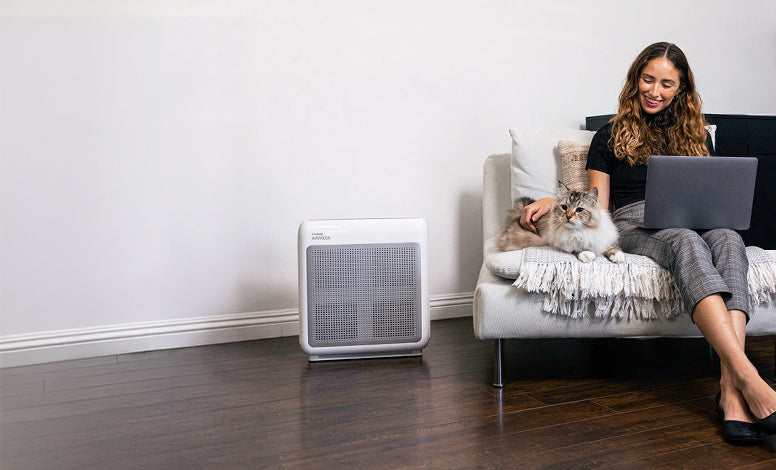
Coway Airmega 400
Premium
Check price
Advanced ionization with dual-sided air intake for large rooms.
View on Amazon →
Dyson Purifier Cool
Premium
Check price
Combines air purification with cooling fan function.
View on Amazon →
Winix 5510
Mid-Range
Check price
Successor to the 5500-2 with True HEPA, carbon filtration, PlasmaWave, and app support.
View on Amazon →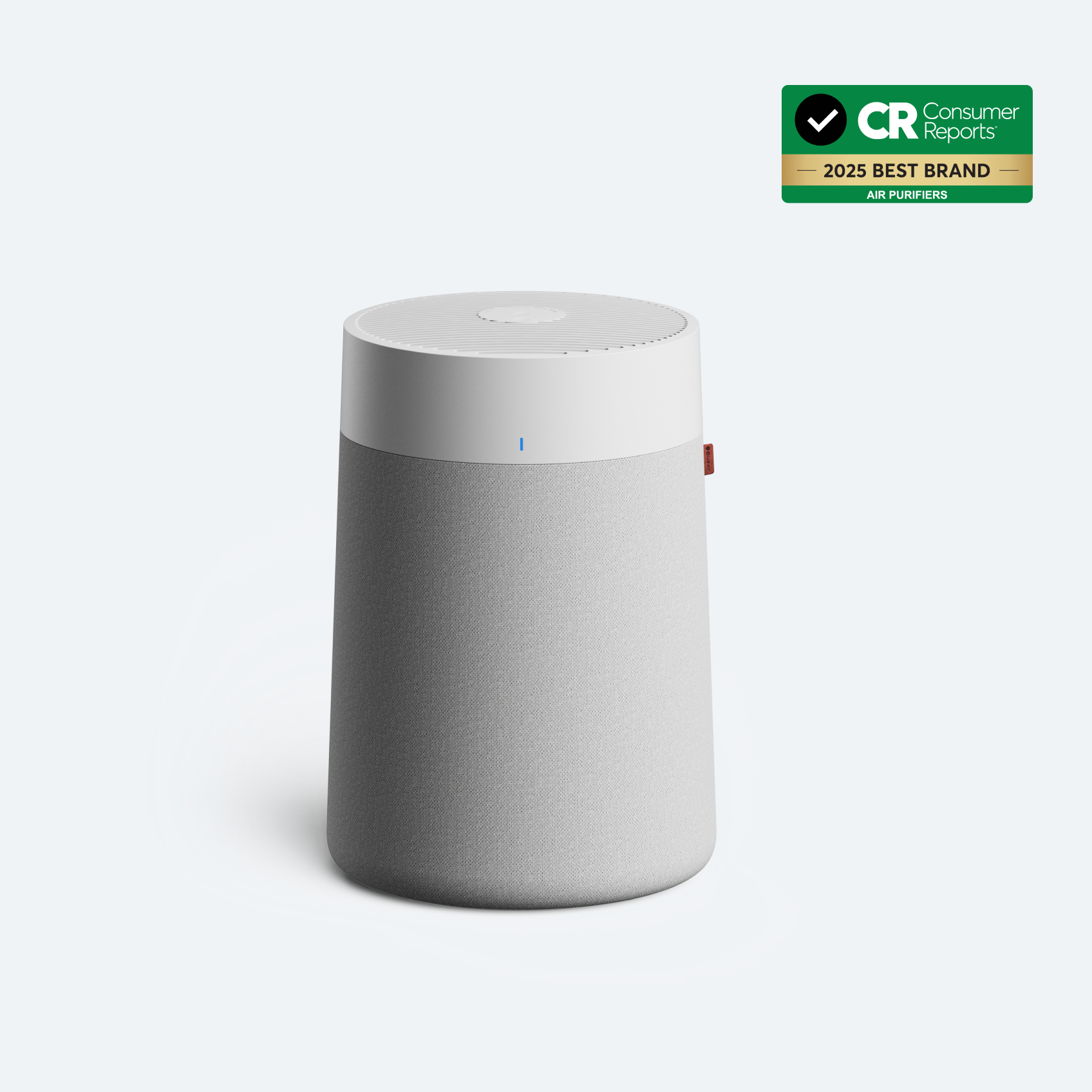
Blueair Blue Pure 211+
Mid-Range
Check price
Swedish design with high CADR and quiet operation.
View on Amazon →
Honeywell HPA300
Mid-Range
Check price
Reliable HEPA filtration with three cleaning levels.
View on Amazon →

Alen BreatheSmart 75i
Premium
Check price
Whisper-quiet premium purifier for large spaces.
View on Amazon →
Molekule Air Pro
Premium
Check price
Advanced photoelectrochemical oxidation technology.
View on Amazon →
GermGuardian AC5250PT
Budget
Check price
Compact with germicidal UV-C light technology.
View on Amazon →

Levoit Air Purifier Pro
Mid-Range
Check price
Smart WiFi enabled with real-time air quality monitoring.
View on Amazon →
Airthings Renew Air Purifier
Smart
Check price
For bedrooms where you want to see the air quality, not guess. Built-in particulate and humidity sensors with an auto mode that ramps with the room. HEPA handles fine particles down to PM1. The catch: no carbon stage, so it does little for odors or gases.
Buy Direct →
Austin Air HealthMate
Premium
Check price
If you deal with smoke, chemicals, or strong odors, this is the heavy hitter. Medical-grade HEPA plus 15 lbs of activated carbon and zeolite, rated for rooms up to 1500 sq ft, with filters that last about 5 years. You pay for it in price and weight.
Buy Direct →
AirFree P2000
Filterless
Check price
A filterless purifier that heats incoming air to destroy mold, bacteria, and dust mites, so there is nothing to replace and no filter cost. The tradeoff is real: it does not capture dust or large allergens the way a HEPA unit does, so pair it with one if particles are your problem.
Buy Direct →
EyeVac Air Touchless Vacuum and Air Purifier
Specialty
Check price
A floor vacuum and air purifier in one, made for entryways and pet areas. Sweep debris to the touchless sensor base and it pulls it in, while the HEPA side handles airborne dust. As a pure air purifier, a dedicated HEPA unit moves more air for the money.
Buy Direct →