Honeywell vs Winix Air Purifier: The Practical Difference
The Core Difference: Noise and Features
Both Honeywell and Winix make legitimate True HEPA air purifiers with strong performance track records. The key differences are noise level, features, and who each product is designed for.
**Honeywell HPA300** ($150-200): Loud (50 dB on low, 67 dB on high), basic controls (3-speed dial, no particle sensor, no app), but extremely reliable and widely used in commercial settings. No ionizer. Available at every major retailer.
**Winix 5500-2** ($200-250): Quiet (28 dB on low), particle sensor with responsive auto mode, PlasmaWave ionizer (disable it — more on this below), higher CADR, and better value per performance dollar.
Spec Comparison
| Spec | Honeywell HPA300 | Winix 5500-2 |
|---|---|---|
| CADR (smoke/dust/pollen) | 300/300/300 | 360/350/350 |
| Noise (lowest setting) | ~50 dB | 28 dB |
| Noise (highest setting) | ~67 dB | 55 dB |
| Particle sensor | No | Yes |
| Auto mode | No | Yes |
| Ionizer | No | Yes (PlasmaWave, can disable) |
| Annual filter cost | ~$40 | ~$40 |
| Price | $150-200 | $200-250 |
Where Honeywell Wins
**No ionizer**: The HPA300 is a HEPA-only design with no electrostatic components. For people who are ozone-sensitive (asthma, chemical sensitivity, infants in the room), the HPA300's ionizer-free design is a genuine advantage. You do not need to remember to disable a feature to get clean air without ozone.
**Commercial and healthcare track record**: The Honeywell brand has been in commercial air filtration for decades. The HPA series is commonly used in medical offices, schools, and commercial settings where reliability over years of continuous operation matters. If you want a proven workhorse, Honeywell has the more established track record.
**Simple controls**: Dial controls with no electronics that can fail. If you want a purifier that runs for 10 years without a firmware update or a dead display, Honeywell's simplicity is a feature.
Where Winix Wins
**Noise**: 50 dB vs 28 dB on the lowest setting is a significant real-world difference. The Honeywell on low is audible in a quiet room and disruptive in a bedroom. The Winix on low is nearly imperceptible. If you plan to run the purifier anywhere near where you sleep or concentrate, this matters more than almost any other spec.
**CADR**: 360 CADR vs 300 CADR — the Winix cleans more air per minute at the same price. For large rooms, this is a meaningful difference in actual air quality.
**Auto mode**: The Winix particle sensor responds to cooking events, pets entering the room, and outdoor air quality changes by automatically increasing fan speed. The Honeywell has no sensor — you set the speed manually. Auto mode means the purifier works harder when needed and quieter when not, which the Honeywell cannot do.
The Ionizer Issue With Winix
The PlasmaWave feature generates trace ozone. Winix says it stays below CARB and EPA limits (0.050 ppm), and independent testing confirms this. But for anyone with ozone sensitivity, "below the limit" is not the same as "zero."
Disabling PlasmaWave: press and hold the PlasmaWave button for 3 seconds to toggle it off. The unit remembers this setting. In PlasmaWave-off mode, the Winix 5500-2 is a standard HEPA+carbon purifier with no ionization.
If you plan to keep PlasmaWave disabled permanently, the Winix still beats the Honeywell on CADR and noise. If you are concerned about accidentally re-enabling it, choose the Honeywell for peace of mind.
The Decision
**Choose Honeywell HPA300 if**: You are ozone-sensitive and do not want to manage an ionizer setting, you value the simplest possible controls, or you specifically need a commercial-class purifier with a long reliability track record.
**Choose Winix 5500-2 if**: Noise is a factor (bedroom, office, bedroom with sleeping partner), you want auto mode to respond to air quality changes, or you want better CADR for a large room. Disable PlasmaWave in the settings.
For most residential use cases, the Winix 5500-2 with PlasmaWave disabled is the better product. For healthcare settings, light-sleeper bedrooms, or ozone-sensitive households, Honeywell's simpler design removes a variable.
Affiliate Disclosure
Clean Air Picks participates in the Amazon Associates program. We earn a small commission from purchases made through our links at no additional cost to you. This helps us maintain and improve our site while providing honest, unbiased reviews.
Recommended Products
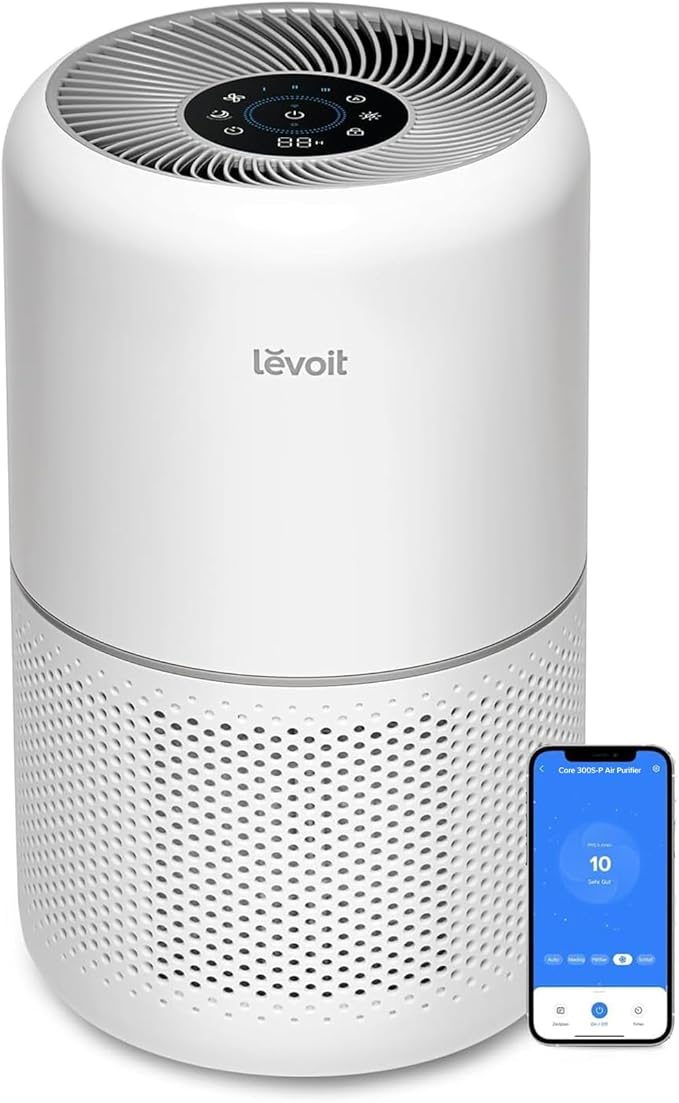
Levoit Core 300S
Budget
Check price
Compact air purifier with H13 HEPA filter for small to medium rooms.
View on Amazon →
Levoit Vital 200S
Budget
Check price
Smart air purifier with app control and auto mode for allergies.
View on Amazon →
Coway Airmega 400
Premium
Check price
Advanced ionization with dual-sided air intake for large rooms.
View on Amazon →
Dyson Purifier Cool
Premium
Check price
Combines air purification with cooling fan function.
View on Amazon →
Winix 5510
Mid-Range
Check price
Successor to the 5500-2 with True HEPA, carbon filtration, PlasmaWave, and app support.
View on Amazon →
Blueair Blue Pure 211+
Mid-Range
Check price
Swedish design with high CADR and quiet operation.
View on Amazon →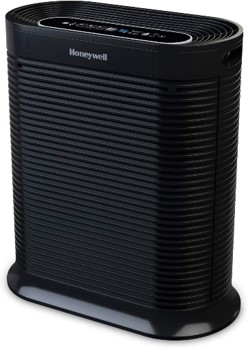
Honeywell HPA300
Mid-Range
Check price
Reliable HEPA filtration with three cleaning levels.
View on Amazon →

Alen BreatheSmart 75i
Premium
Check price
Whisper-quiet premium purifier for large spaces.
View on Amazon →
Molekule Air Pro
Premium
Check price
Advanced photoelectrochemical oxidation technology.
View on Amazon →
GermGuardian AC5250PT
Budget
Check price
Compact with germicidal UV-C light technology.
View on Amazon →

Levoit Air Purifier Pro
Mid-Range
Check price
Smart WiFi enabled with real-time air quality monitoring.
View on Amazon →
Airthings Renew Air Purifier
Smart
Check price
For bedrooms where you want to see the air quality, not guess. Built-in particulate and humidity sensors with an auto mode that ramps with the room. HEPA handles fine particles down to PM1. The catch: no carbon stage, so it does little for odors or gases.
Buy Direct →
Austin Air HealthMate
Premium
Check price
If you deal with smoke, chemicals, or strong odors, this is the heavy hitter. Medical-grade HEPA plus 15 lbs of activated carbon and zeolite, rated for rooms up to 1500 sq ft, with filters that last about 5 years. You pay for it in price and weight.
Buy Direct →
AirFree P2000
Filterless
Check price
A filterless purifier that heats incoming air to destroy mold, bacteria, and dust mites, so there is nothing to replace and no filter cost. The tradeoff is real: it does not capture dust or large allergens the way a HEPA unit does, so pair it with one if particles are your problem.
Buy Direct →
EyeVac Air Touchless Vacuum and Air Purifier
Specialty
Check price
A floor vacuum and air purifier in one, made for entryways and pet areas. Sweep debris to the touchless sensor base and it pulls it in, while the HEPA side handles airborne dust. As a pure air purifier, a dedicated HEPA unit moves more air for the money.
Buy Direct →