How Air Purifiers Work: The Mechanics Behind HEPA, Carbon, and Ionizers
The Basic Mechanism
Every air purifier uses a fan to draw room air through a filter medium, then returns the cleaned air to the room. The fan speed determines how fast the room air turns over; the filter determines what gets captured. The fan and filter work together — a fast fan pulling air through a poor filter does not clean well; a great filter with a weak fan does not process enough air volume to matter.
CADR (Clean Air Delivery Rate) is the combined metric: CADR = airflow rate × filtration efficiency. A unit rated at 300 CADR delivers 300 cubic feet per minute of cleaned air to the smoke, dust, or pollen categories measured.
How HEPA Filtration Works
True HEPA filters capture particles through three physical mechanisms, each effective at different particle sizes:
**Inertial impaction**: Particles larger than about 1 micron have enough mass that when the airstream curves around a fiber, the particle cannot follow the curve and collides with the fiber. This captures dust, pollen, and most pet dander.
**Interception**: Mid-size particles (0.3-1 micron) follow the airstream but pass close enough to fibers to contact them and stick. Mold spores and most bacteria are captured this way.
**Diffusion**: Very small particles (under 0.1 micron) move erratically due to Brownian motion — they bounce randomly rather than following the airstream, which causes them to collide with fibers despite their small size. Virus particles and ultrafine combustion particles are captured this way.
The "most penetrating particle size" — where HEPA is least efficient — is around 0.3 microns, where none of the three mechanisms is optimal. True HEPA must still capture 99.97% of particles at this worst-case size. Larger and smaller particles are captured more efficiently.
HEPA filter density creates airflow resistance. High-density filters capture more particles but require more fan power to maintain airflow. This is why HEPA purifiers have louder fans than cheaper filtered units — they are pushing air through a much denser medium.
How Activated Carbon Works
Carbon filtration uses adsorption — not to be confused with absorption. In adsorption, gas molecules physically bind to the surface of the carbon rather than being absorbed into it.
Activated carbon has an enormous surface area per unit weight due to its porous structure. One gram of activated carbon can have a surface area of 500-3,000 square meters. Gas molecules (VOCs, odors, chemical vapors) passing through the carbon contact this surface and bond to it, removing them from the airstream.
Carbon saturation: unlike HEPA, which physically traps particles until replaced, activated carbon adsorption capacity is finite. Once the binding sites are full, the carbon cannot adsorb additional molecules. The more carbon in the filter, the longer it lasts and the more effectively it handles sustained VOC loads. Budget purifiers with 2-4 oz of carbon saturate in months under continuous odor load; purpose-built carbon purifiers with 10-15 lbs of carbon last 3-5 years.
How Ionizers Work
Ionizers release negatively charged ions into room air. These ions attach to airborne particles, giving them a negative charge. Negatively charged particles are attracted to positively charged surfaces — walls, furniture, floors — and settle out of the air.
The limitation: ionizers do not remove particles from the environment, they just move them from the air to surfaces. The particles can be resuspended if disturbed. Additionally, the ionization process generates ozone, a respiratory irritant, as a byproduct. The amount varies by product — some units stay below health thresholds, others do not.
Some purifiers use ionizers as a supplement to HEPA filtration (Winix PlasmaWave, Blueair HEPASilent), with the ionizer reducing the airflow resistance needed to achieve a given CADR rather than as the primary filtration mechanism. In these designs, the ozone output is lower because the ionizer is working at reduced intensity.
Auto Mode and Particle Sensors
Most mid-range and premium purifiers include an air quality sensor and auto mode. The sensor is typically an optical particle sensor — a laser or infrared beam detects when particles interrupt the light path, providing a rough PM2.5 measurement. When particle concentration rises (someone cooking, a pet entering the room, a window opening during high-pollen weather), the sensor triggers the fan to increase speed. When air quality improves, fan speed drops to maintain quiet operation.
The quality of auto mode varies. Some sensors are responsive (Winix, Levoit Vital series); others are sluggish, taking 10-15 minutes to respond to an air quality event. Sensor placement matters — a sensor inside the unit near the air intake gives faster readings than a sensor on the outside casing.
Pre-Filters
Most multi-stage purifiers include a pre-filter before the HEPA layer. The pre-filter captures large particles (pet hair, lint, large dust particles) before they reach the HEPA filter, which extends HEPA filter life. Pre-filters are typically washable and should be cleaned monthly to maintain airflow. A clogged pre-filter restricts airflow significantly, reducing effective CADR.
Affiliate Disclosure
Clean Air Picks participates in the Amazon Associates program. We earn a small commission from purchases made through our links at no additional cost to you. This helps us maintain and improve our site while providing honest, unbiased reviews.
Recommended Products
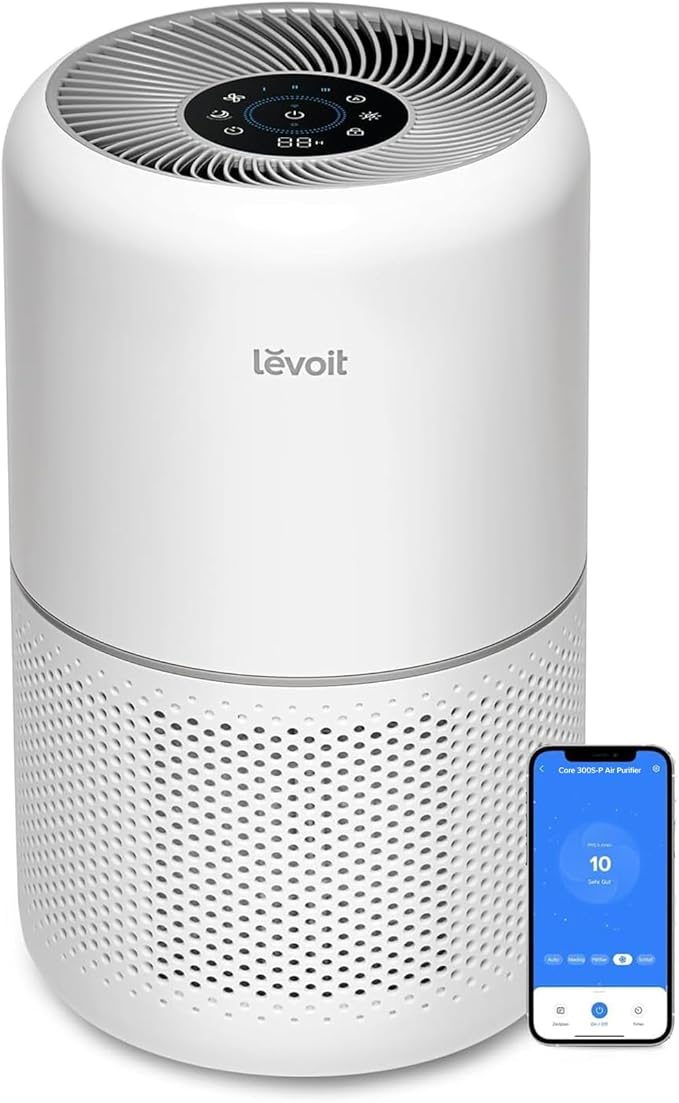
Levoit Core 300S
Budget
Check price
Compact air purifier with H13 HEPA filter for small to medium rooms.
View on Amazon →
Levoit Vital 200S
Budget
Check price
Smart air purifier with app control and auto mode for allergies.
View on Amazon →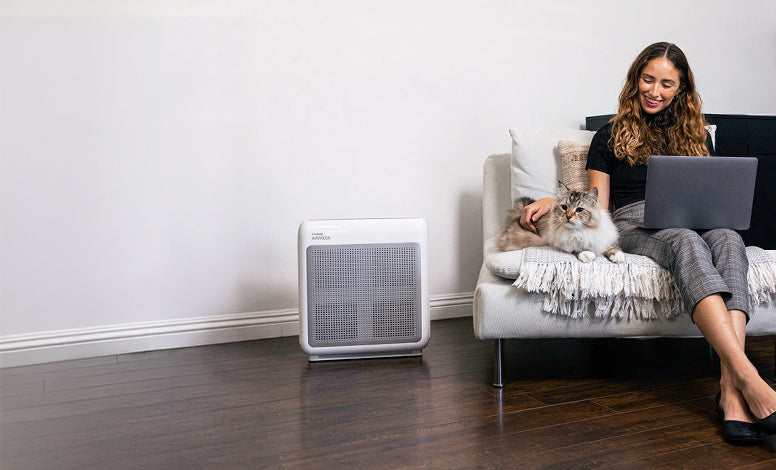
Coway Airmega 400
Premium
Check price
Advanced ionization with dual-sided air intake for large rooms.
View on Amazon →
Dyson Purifier Cool
Premium
Check price
Combines air purification with cooling fan function.
View on Amazon →
Winix 5510
Mid-Range
Check price
Successor to the 5500-2 with True HEPA, carbon filtration, PlasmaWave, and app support.
View on Amazon →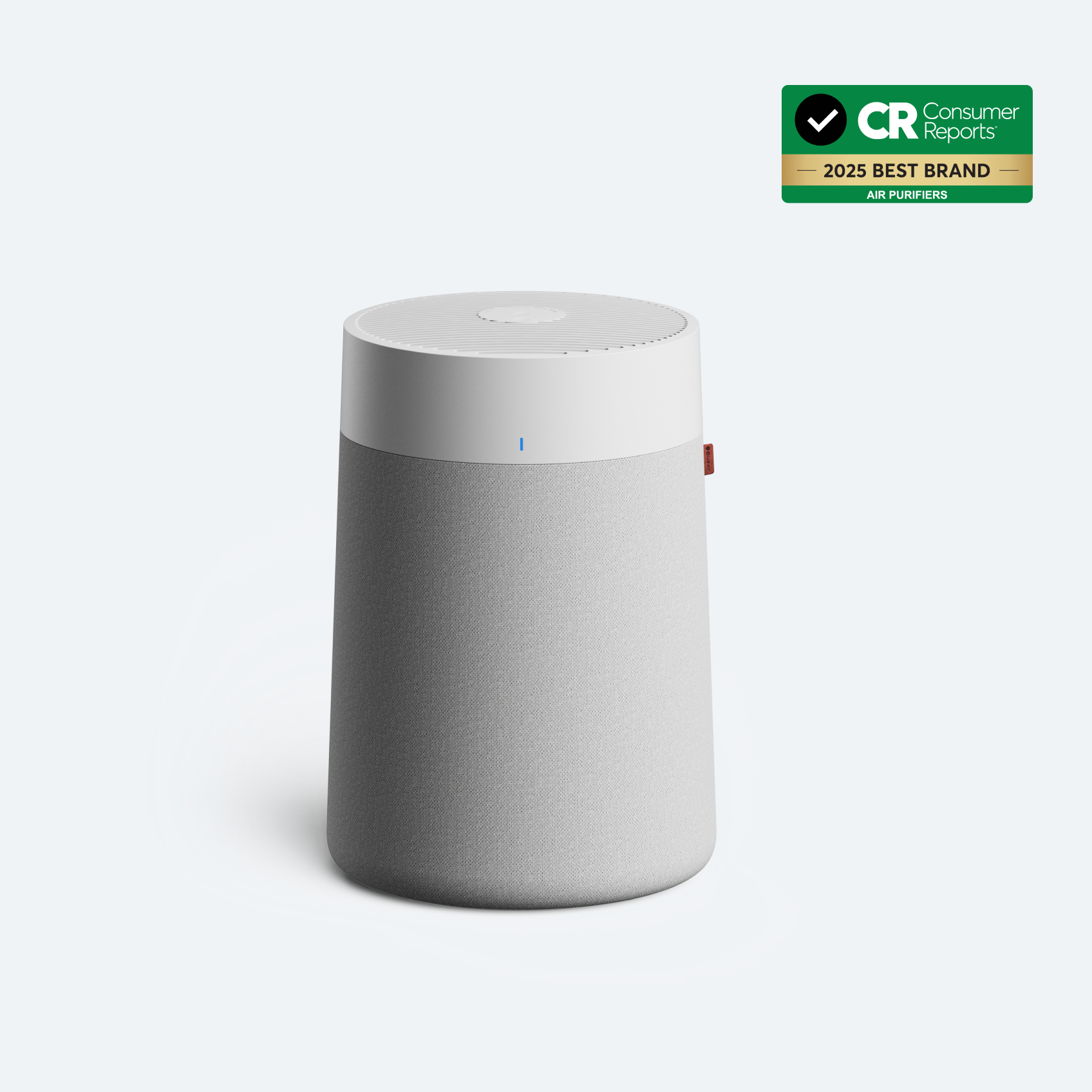
Blueair Blue Pure 211+
Mid-Range
Check price
Swedish design with high CADR and quiet operation.
View on Amazon →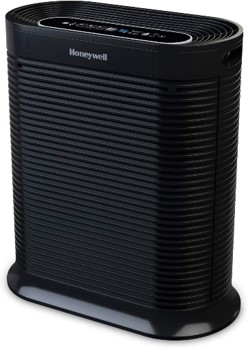
Honeywell HPA300
Mid-Range
Check price
Reliable HEPA filtration with three cleaning levels.
View on Amazon →

Alen BreatheSmart 75i
Premium
Check price
Whisper-quiet premium purifier for large spaces.
View on Amazon →
Molekule Air Pro
Premium
Check price
Advanced photoelectrochemical oxidation technology.
View on Amazon →
GermGuardian AC5250PT
Budget
Check price
Compact with germicidal UV-C light technology.
View on Amazon →

Levoit Air Purifier Pro
Mid-Range
Check price
Smart WiFi enabled with real-time air quality monitoring.
View on Amazon →
Airthings Renew Air Purifier
Smart
Check price
For bedrooms where you want to see the air quality, not guess. Built-in particulate and humidity sensors with an auto mode that ramps with the room. HEPA handles fine particles down to PM1. The catch: no carbon stage, so it does little for odors or gases.
Buy Direct →
Austin Air HealthMate
Premium
Check price
If you deal with smoke, chemicals, or strong odors, this is the heavy hitter. Medical-grade HEPA plus 15 lbs of activated carbon and zeolite, rated for rooms up to 1500 sq ft, with filters that last about 5 years. You pay for it in price and weight.
Buy Direct →
AirFree P2000
Filterless
Check price
A filterless purifier that heats incoming air to destroy mold, bacteria, and dust mites, so there is nothing to replace and no filter cost. The tradeoff is real: it does not capture dust or large allergens the way a HEPA unit does, so pair it with one if particles are your problem.
Buy Direct →
EyeVac Air Touchless Vacuum and Air Purifier
Specialty
Check price
A floor vacuum and air purifier in one, made for entryways and pet areas. Sweep debris to the touchless sensor base and it pulls it in, while the HEPA side handles airborne dust. As a pure air purifier, a dedicated HEPA unit moves more air for the money.
Buy Direct →