How Often to Replace an Air Purifier Filter: Real Intervals by Filter Type and Environment
The Manufacturer Interval Is an Assumption, Not a Fact
When Levoit says "replace every 6-8 months," that number is based on a test scenario: 12 hours of daily operation, moderate air quality, single-occupant home, no pets, no smoking. Your situation may differ significantly. A pet-heavy household with two dogs, a dusty older home, or a kitchen that runs at high heat multiple nights a week will wear a filter in 4-5 months. A single-person apartment with clean air and the unit set to auto (which runs low most of the time) might stretch a filter to 10-12 months.
The interval on the box is a starting point. Your environment determines the actual service life.
HEPA Filters: When and Why to Replace
Standard interval: 6-12 months depending on brand and environment.
What actually exhausts a HEPA filter: particle loading. The filter medium is a dense mat of fibers. As particles accumulate, the filter becomes more efficient (more particles captured per pass) but airflow drops. Once airflow drops past a threshold, the unit's effective CADR falls below what you bought it for — the fan has to work harder and the filtration rate per hour decreases.
Signs a HEPA filter needs replacing before the indicator triggers:
- Audible increase in fan motor effort at the same speed setting
- Reduced airflow from the unit's outlet (hold your hand 12 inches from the outlet and compare to when the filter was new)
- Allergy or asthma symptoms returning despite the unit running on the same schedule
What shortens HEPA life significantly:
- Pets (dander and hair, especially dogs and long-haired cats) — cut the interval by 30-50%
- High-dust environments (older homes, near construction, dusty roads) — similar reduction
- Running the unit 24/7 vs 12 hours/day — roughly doubles the load rate
- Not vacuuming the pre-filter monthly
HEPA replacement intervals by environment:
| Environment | Typical Interval |
|---|---|
| Single person, clean apartment, no pets | 10-12 months |
| Average household, 2 people, no pets | 8-10 months |
| Household with 1 pet | 6-8 months |
| Multi-pet household | 4-6 months |
| Smoker in household | 3-5 months |
| Heavy dust (older home, near road) | 5-7 months |
Carbon Filters: Different Mechanism, Different Signs
Standard interval: 3-6 months (much shorter than HEPA).
What exhausts a carbon filter: saturation. Activated carbon works by adsorbing gas molecules into its porous surface. Once those pores are filled, the carbon cannot bind additional molecules and the filter passes odors through without removing them.
Carbon saturation is not visible. You cannot look at a carbon filter and tell if it is spent. The only reliable indicator: smell. If you run the unit on high for 30 minutes in a room with a baseline odor (pet smell, cooking residue, musty closet) and the smell persists, the carbon is likely saturated.
Carbon shortens faster in:
- Smoking households (2-3 months)
- Kitchens with frequent cooking (4-5 months)
- Homes with multiple pets
- New construction or freshly painted rooms (high initial VOC load)
For most of these high-VOC scenarios, a standalone HEPA unit is simpler than a combo unit: the carbon needs replacing 2-3x more often than the HEPA, and in a combo filter you either replace both or replace neither.
Pre-Filters: Maintenance, Not Replacement
Vacuuming interval: monthly, every 2-3 weeks in pet households.
Pre-filters capture hair, lint, and large dust particles before they reach the HEPA. They are the most important maintenance item for extending HEPA filter life. A clogged pre-filter loads the HEPA with material it should never see.
Most pre-filters are washable mesh (vacuum and rinse) or replaceable foam (replace every 3 months). Check the manufacturer guidance for your specific model.
The 15-minute monthly habit: pull the pre-filter, take it outside, vacuum both sides with the brush attachment, optionally rinse with water and let it dry fully before reinstalling. This alone extends HEPA filter life by months.
The Filter Indicator Light Problem
Most modern air purifiers have filter replacement indicators. The problem: they work on a timer (triggered after a fixed number of operating hours), not on actual filter condition. A filter indicator that triggers at 2,000 hours assumes your 2,000 hours ran in typical conditions. If you ran in a pet-heavy environment, the filter may be spent at 1,400 hours. If your air was unusually clean, it may still be functional at 2,400 hours.
Use the indicator as a reminder to check the filter, not as a definitive replacement signal. Inspect the filter and use the signs above to judge its actual condition.
Annual Filter Cost by Unit
| Unit | HEPA Interval | Annual HEPA Cost | Carbon Add | Total Annual Est. |
|---|---|---|---|---|
| Levoit Core 300S | 6-8 months | ~$20-30 | included | ~$25-35 |
| Coway AP-1512HH | 12 months | ~$25 | every 6 mo | ~$55 |
| Coway Airmega 400 | 12 months | ~$90 combo | included | ~$90 |
| Winix 5500-2 | 12 months | ~$40 | washable pellets | ~$40 |
| Alen BreatheSmart 75i | 12-15 months | ~$75-100 | included | ~$80-100 |
Factor annual filter cost into total ownership cost before buying. A $90 purifier with $80/year in filters is more expensive over 5 years than a $200 unit with $30/year filters.
Bottom Line
Replace HEPA every 6-12 months depending on environment — more often with pets, dust, or smoking. Replace carbon filters every 3-6 months and rely on the smell test, not the timer. Vacuum the pre-filter monthly. Do not trust the indicator light alone — inspect the filter visually and by airflow at the 6-month mark regardless of what the light says.
The single highest-leverage filter habit: monthly pre-filter vacuuming. It doubles HEPA service life in most environments and costs nothing.
Affiliate Disclosure
Clean Air Picks participates in the Amazon Associates program. We earn a small commission from purchases made through our links at no additional cost to you. This helps us maintain and improve our site while providing honest, unbiased reviews.
Recommended Products
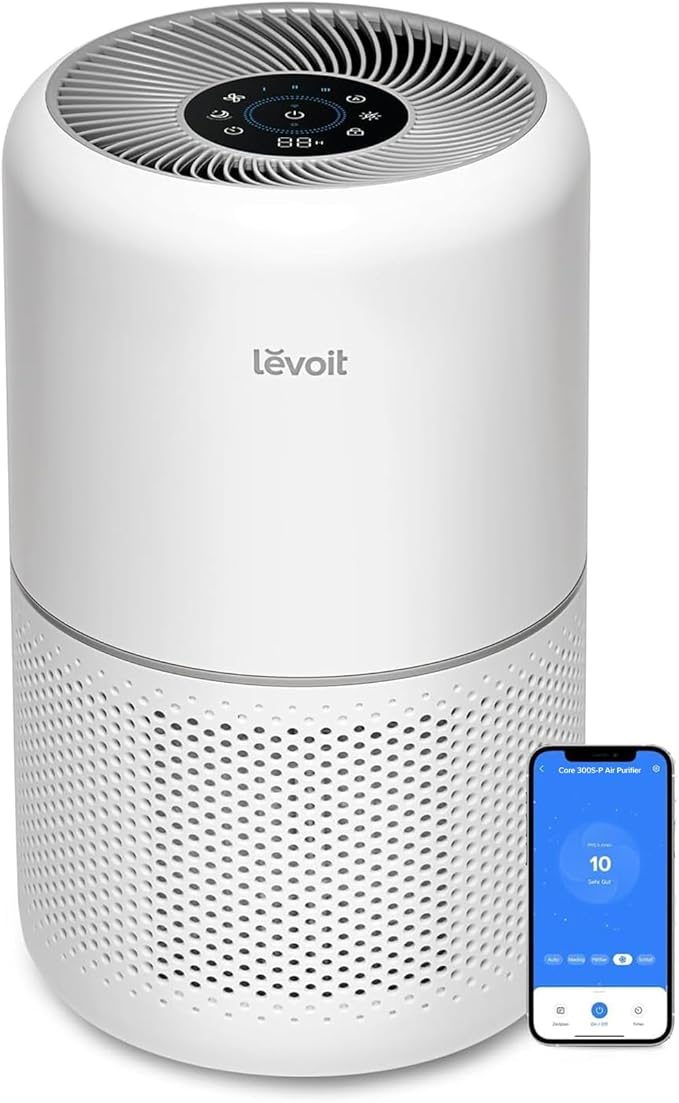
Levoit Core 300S
Budget
Check price
Compact air purifier with H13 HEPA filter for small to medium rooms.
View on Amazon →
Levoit Vital 200S
Budget
Check price
Smart air purifier with app control and auto mode for allergies.
View on Amazon →
Coway Airmega 400
Premium
Check price
Advanced ionization with dual-sided air intake for large rooms.
View on Amazon →
Dyson Purifier Cool
Premium
Check price
Combines air purification with cooling fan function.
View on Amazon →
Winix 5510
Mid-Range
Check price
Successor to the 5500-2 with True HEPA, carbon filtration, PlasmaWave, and app support.
View on Amazon →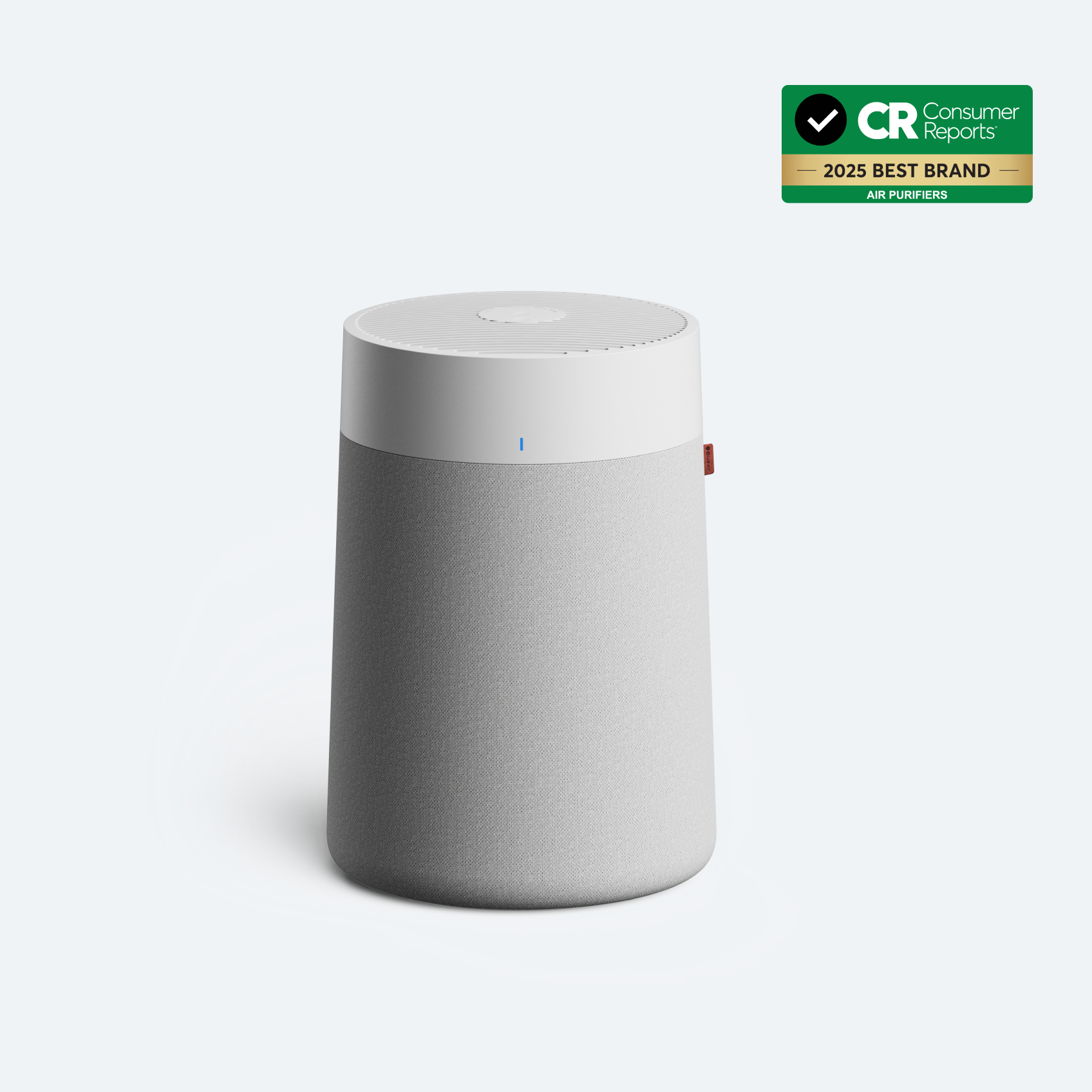
Blueair Blue Pure 211+
Mid-Range
Check price
Swedish design with high CADR and quiet operation.
View on Amazon →
Honeywell HPA300
Mid-Range
Check price
Reliable HEPA filtration with three cleaning levels.
View on Amazon →

Alen BreatheSmart 75i
Premium
Check price
Whisper-quiet premium purifier for large spaces.
View on Amazon →
Molekule Air Pro
Premium
Check price
Advanced photoelectrochemical oxidation technology.
View on Amazon →
GermGuardian AC5250PT
Budget
Check price
Compact with germicidal UV-C light technology.
View on Amazon →

Levoit Air Purifier Pro
Mid-Range
Check price
Smart WiFi enabled with real-time air quality monitoring.
View on Amazon →
Airthings Renew Air Purifier
Smart
Check price
For bedrooms where you want to see the air quality, not guess. Built-in particulate and humidity sensors with an auto mode that ramps with the room. HEPA handles fine particles down to PM1. The catch: no carbon stage, so it does little for odors or gases.
Buy Direct →
Austin Air HealthMate
Premium
Check price
If you deal with smoke, chemicals, or strong odors, this is the heavy hitter. Medical-grade HEPA plus 15 lbs of activated carbon and zeolite, rated for rooms up to 1500 sq ft, with filters that last about 5 years. You pay for it in price and weight.
Buy Direct →
AirFree P2000
Filterless
Check price
A filterless purifier that heats incoming air to destroy mold, bacteria, and dust mites, so there is nothing to replace and no filter cost. The tradeoff is real: it does not capture dust or large allergens the way a HEPA unit does, so pair it with one if particles are your problem.
Buy Direct →
EyeVac Air Touchless Vacuum and Air Purifier
Specialty
Check price
A floor vacuum and air purifier in one, made for entryways and pet areas. Sweep debris to the touchless sensor base and it pulls it in, while the HEPA side handles airborne dust. As a pure air purifier, a dedicated HEPA unit moves more air for the money.
Buy Direct →