How to Test Indoor Air Quality at Home
What to Measure and Why It Matters
Indoor air contains several distinct categories of pollutants. A single monitor rarely measures all of them well. Before buying a monitor, decide which problem you are trying to diagnose.
**PM2.5 (fine particulate matter)**: The most important measurement for most households. PM2.5 includes dust, smoke, pollen fragments, and pet dander. A laser particle counter gives real-time readings and is the most reliable sensor type in consumer monitors.
**VOCs (volatile organic compounds)**: Gases off-gassed from furniture, flooring, cleaning products, and cooking. Consumer VOC sensors (typically metal oxide sensors) give relative readings, not absolute concentrations. They are good for detecting VOC events (cooking, a fresh piece of furniture off-gassing) but cannot accurately identify specific chemicals or concentrations.
**CO2**: Indicates ventilation adequacy. Outdoor CO2 is ~420 ppm. Above 1,000 ppm in an occupied room indicates poor ventilation. Above 1,500 ppm causes measurable cognitive impairment in most people. An accurate CO2 sensor uses NDIR (non-dispersive infrared) technology; avoid monitors that estimate CO2 from VOC readings.
**Humidity**: High humidity (above 60%) promotes mold and dust mite growth. Low humidity (below 30%) dries mucous membranes and increases susceptibility to respiratory irritants.
Consumer Air Quality Monitors Worth Considering
**Awair Element ($150)**: Measures PM2.5, VOC, CO2, temperature, and humidity. Uses a laser PM2.5 sensor and NDIR CO2 sensor. The most accurate mid-range option for the full set of measurements. App tracks historical trends.
**IQAir AirVisual Pro ($270)**: Best-in-class CO2 sensor accuracy, PM2.5, temperature, and humidity. Displays AQI in real time. Also integrates outdoor AQI data from nearby stations for comparison. More display, less design focus.
**Govee Air Quality Monitor ($50)**: PM2.5, PM10, temperature, humidity. No CO2 or VOC. Good for particulate-focused monitoring on a budget. Less accurate at the lowest PM2.5 concentrations but adequate for detecting cooking smoke, wildfire infiltration, and general dust events.
What Consumer Monitors Cannot Tell You
VOC sensors cannot identify which specific chemicals are present or at what concentrations. If you suspect formaldehyde (from new flooring, furniture, or particleboard), a specific formaldehyde test strip or lab test is more reliable than a broad VOC reading.
PM sensors count particles by size using light scattering but cannot distinguish between particle types. A monitor showing elevated PM2.5 cannot tell you if that is dust, pollen, or wildfire smoke.
For mold, radon, asbestos, or lead, consumer monitors are not the right tool. These require lab testing or certified professional inspection.
When to Use a Lab Test Instead
Consider a lab test if:
- You want quantified formaldehyde or specific VOC readings after renovation or new furniture installation
- You suspect mold growth and need documentation for remediation or insurance
- Radon screening (EPA recommends testing all homes below the third floor)
- Asbestos or lead concern in pre-1980 construction
The EPA's Indoor Air Quality website lists certified testing services by state. Radon test kits are available at hardware stores for $10-25; mail-in analysis is included in the kit price.
Simple Baseline Test Without a Monitor
If you do not want to buy a monitor, a useful baseline: open windows on a low-outdoor-AQI day for 30 minutes, then close up and smell for persistent musty, chemical, or stale odors over the next hour. Persistent odors after fresh-air flush indicate an indoor source. No persistent odor after a fresh-air flush usually means the building's air quality is adequate for most households.
Affiliate Disclosure
Clean Air Picks participates in the Amazon Associates program. We earn a small commission from purchases made through our links at no additional cost to you. This helps us maintain and improve our site while providing honest, unbiased reviews.
Recommended Products
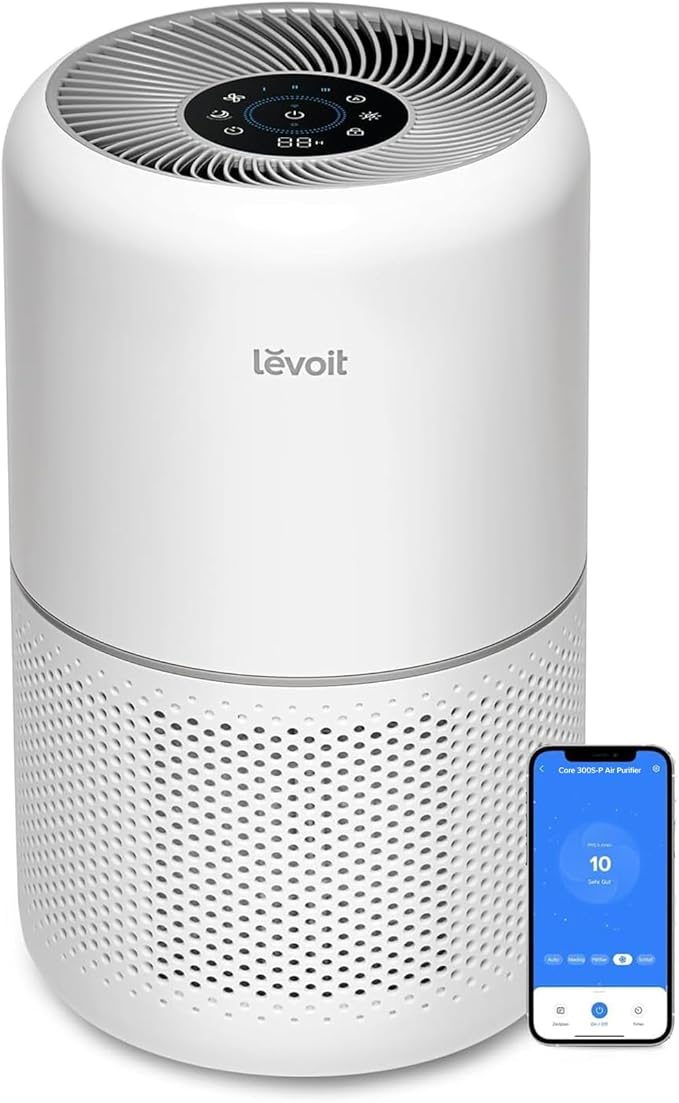
Levoit Core 300S
Budget
Check price
Compact air purifier with H13 HEPA filter for small to medium rooms.
View on Amazon →
Levoit Vital 200S
Budget
Check price
Smart air purifier with app control and auto mode for allergies.
View on Amazon →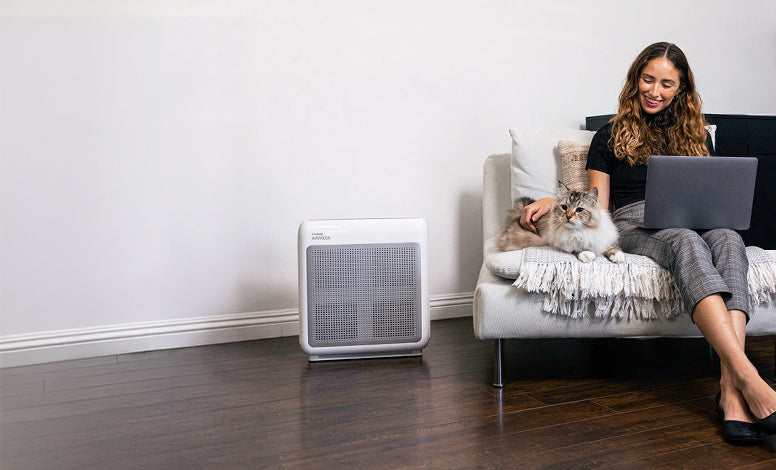
Coway Airmega 400
Premium
Check price
Advanced ionization with dual-sided air intake for large rooms.
View on Amazon →
Dyson Purifier Cool
Premium
Check price
Combines air purification with cooling fan function.
View on Amazon →
Winix 5510
Mid-Range
Check price
Successor to the 5500-2 with True HEPA, carbon filtration, PlasmaWave, and app support.
View on Amazon →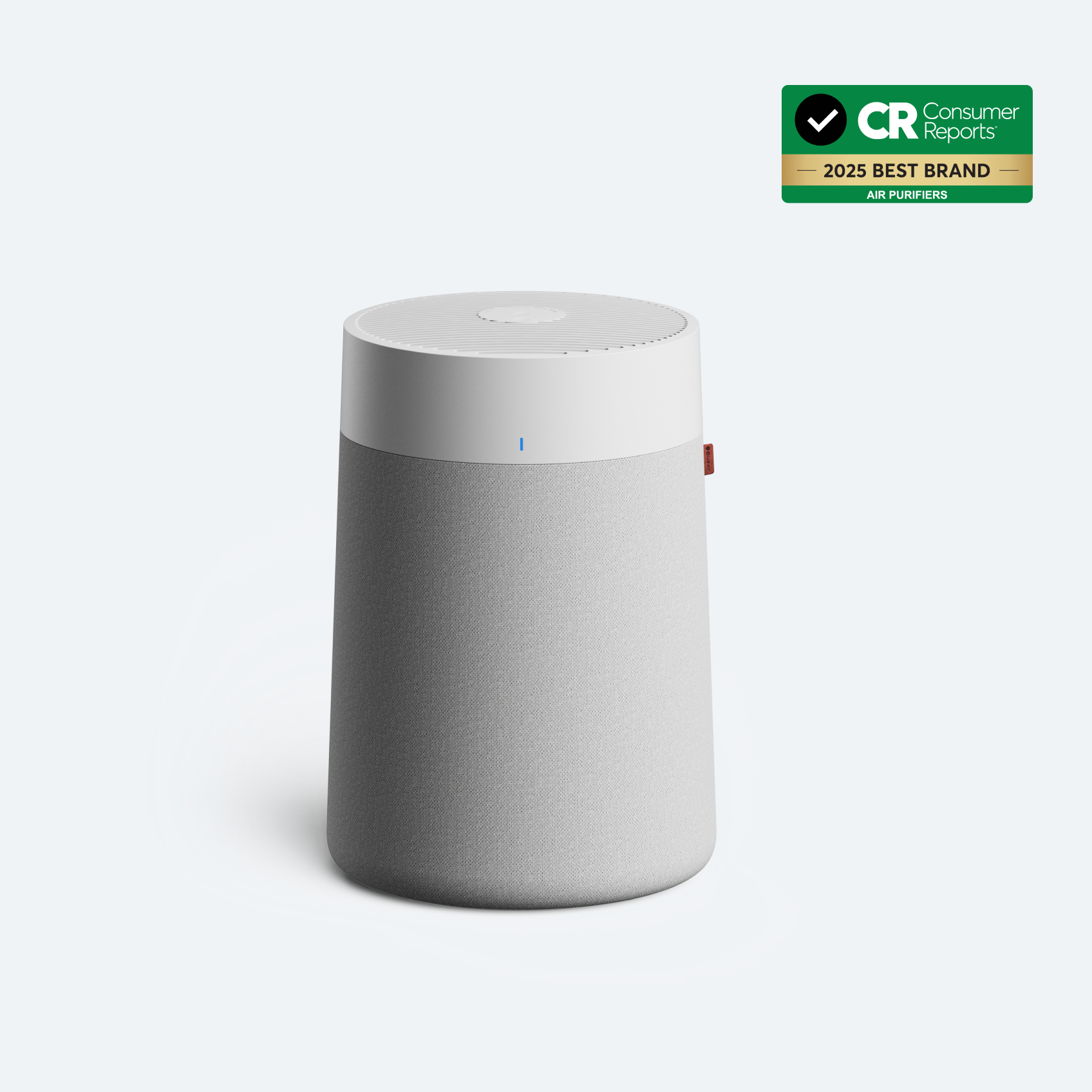
Blueair Blue Pure 211+
Mid-Range
Check price
Swedish design with high CADR and quiet operation.
View on Amazon →
Honeywell HPA300
Mid-Range
Check price
Reliable HEPA filtration with three cleaning levels.
View on Amazon →

Alen BreatheSmart 75i
Premium
Check price
Whisper-quiet premium purifier for large spaces.
View on Amazon →
Molekule Air Pro
Premium
Check price
Advanced photoelectrochemical oxidation technology.
View on Amazon →
GermGuardian AC5250PT
Budget
Check price
Compact with germicidal UV-C light technology.
View on Amazon →

Levoit Air Purifier Pro
Mid-Range
Check price
Smart WiFi enabled with real-time air quality monitoring.
View on Amazon →
Airthings Renew Air Purifier
Smart
Check price
For bedrooms where you want to see the air quality, not guess. Built-in particulate and humidity sensors with an auto mode that ramps with the room. HEPA handles fine particles down to PM1. The catch: no carbon stage, so it does little for odors or gases.
Buy Direct →
Austin Air HealthMate
Premium
Check price
If you deal with smoke, chemicals, or strong odors, this is the heavy hitter. Medical-grade HEPA plus 15 lbs of activated carbon and zeolite, rated for rooms up to 1500 sq ft, with filters that last about 5 years. You pay for it in price and weight.
Buy Direct →
AirFree P2000
Filterless
Check price
A filterless purifier that heats incoming air to destroy mold, bacteria, and dust mites, so there is nothing to replace and no filter cost. The tradeoff is real: it does not capture dust or large allergens the way a HEPA unit does, so pair it with one if particles are your problem.
Buy Direct →
EyeVac Air Touchless Vacuum and Air Purifier
Specialty
Check price
A floor vacuum and air purifier in one, made for entryways and pet areas. Sweep debris to the touchless sensor base and it pulls it in, while the HEPA side handles airborne dust. As a pure air purifier, a dedicated HEPA unit moves more air for the money.
Buy Direct →